Palpitations can feel like your heart is pounding, fluttering, or skipping beats.
They often feel like a pounding in the chest, throat, or neck.
While these sensations are often harmless, you should seek medical advice if they
come with dizziness, lightheadedness, or fainting. These could be signs of a
more serious heart problem.
They could be an awareness of a normal beat, or represent a rhythm disturbance.
Palpitations causes
- Stress and Anxiety: It can trigger palpitations or make them worse.
- Caffeine and Alcohol: Excessive intake can lead to palpitations.
- Dehydration: May cause irregular heartbeats.
- Medications: Some drugs can induce palpitations.
- Underlying Conditions: These include arrhythmias, atrial fibrillation, and structural heart problems. They can be harmless, but persistent or severe symptoms may require medical attention to rule out underlying issues.
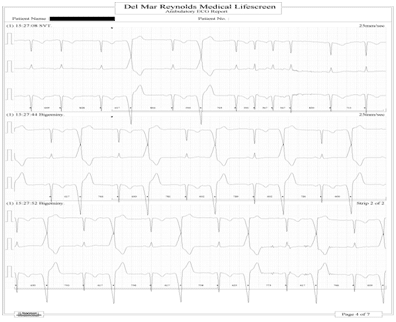
Below, you can find a 24-hour ECG trace showing early beats (the large spikes) that can lead to symptoms:
Atrial Fibrillation Causes
Atrial fibrillation (AF) is a common type of irregular heartbeat in which rapid and chaotic electrical signals cause the upper chambers of the heart (atria) to beat out of sync with the lower chambers (ventricles). It happens because the heart’s normal synchronised beating becomes disorganised and is overtaken by a faster, disordered beat.
AF often occurs in older adults, and it’s often caused by:
- High Blood Pressure
- Obesity
- Sleep Apnoea
- Thyroid Disorders
- Disease of Heart Muscle
- Disease of Heart Valves
Heart Palpitations Symptoms
Palpitations can feel like your heart is pounding, fluttering, or skipping beats. They often feel like a pounding in the chest, throat, or neck.
While these sensations are often harmless, you should seek medical advice if they come with dizziness, lightheadedness, or fainting. These could be signs of a more serious heart problem.
They could be an awareness of a normal beat, or represent a rhythm disturbance.
Atrial Fibrillation Symptoms
Atrial fibrillation can feel like:
- Palpitations: An irregular or fast heartbeat.
- Breathlessness: Difficulty breathing or feeling short of breath.
- Chest Pain: Discomfort or pain in the chest area.
- Blackouts: Fainting or feeling light-headed (rare).
Additional Atrial Fibrillation Symptoms:
- Fatigue: Feeling unusually tired or weak.
- Dizziness: Feeling light-headed or unsteady.
- Confusion: Difficulty concentrating or feeling mentally foggy.
AF increases the risk of blood clots forming in the heart, which can lead to a stroke. Therefore, treatment focuses on reducing stroke risk and managing symptoms by controlling the heart rhythm.
Heart Palpitations Investigation
Dr Malik will start by taking a detailed history from you and performing a general examination.
After this, he’ll likely order you the following tests:
- Private ECG (Electrocardiogram): Records the heart’s electrical activity and helps identify irregularities.
- Private Holter Monitor: Provides 24 or 48-hour continuous monitoring of heart rhythms.
- Private Echocardiogram (TEE): Evaluates heart structure and function.
- Longer-Term Monitoring: May include event recorders or implantable loop recorders for infrequent symptoms.
- Blood Tests: Used to rule out underlying issues such as thyroid disorders.
These tests help determine whether palpitations are benign or related to a more serious condition.
For example, below are irregular beats of AF seen on a Holter monitor:

Atrial Fibrillation Investigation
An atrial fibrillation diagnosis usually starts with feeling your pulse, followed by the same recommended private tests from above. Accurate diagnosis is important for effective management and treatment planning.
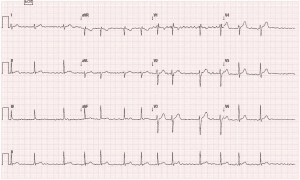
An ECG of Atrial Fibrillationatrial fibrillation is shown below:
Palpitations Treatment
Treatment for palpitations varies based on the underlying cause. It might include the following options:
- Lifestyle Changes:
- Reduce Caffeine and Alcohol Intake: Both can trigger or worsen palpitations.
- Manage Stress: Techniques such as relaxation exercises or therapy can be beneficial.
- Stay Hydrated and Get Regular Sleep: Proper hydration and rest support heart health.
- Avoid Certain Medications: Over-the-counter drugs can sometimes exacerbate palpitations.
- Beta-Blockers: Help manage heart rate and rhythm.
- Anti-Arrhythmic Drugs: Address specific irregular heartbeats.
- Blood Thinners: These are used if AF is diagnosed to prevent stroke, such as Warfarin and DOACs.
- Procedures:
- Private Ablation: Destroys problematic heart tissue, causing irregular rhythms.
- Private Pacemaker: Regulates the heart’s rhythm in certain conditions.
- Private Implantable Cardioverter-Defibrillator (ICD): For severe cases to manage life-threatening arrhythmias.
Below you can find an illustration of an ICD that is larger than a pacemaker but still goes under the skin:

Atrial Fibrillation Treatment
Treatment for atrial fibrillation focuses on managing symptoms and reducing stroke risk mostly with medication:
Blood Thinners:
- Warfarin: Requires regular monitoring but is effective for stroke prevention.
- DOACs (Direct Oral Anticoagulants): Newer alternatives with less frequent monitoring.
- Aspirin: Less effective than other options but may be used in some cases.
Rate Control AF Medications:
- Beta-Blockers: Help control heart rate.
- Digoxin: Another option for managing heart rate in AF patients.
Rhythm Control:
- Private Cardioversion: Uses drugs or electrical treatment to restore normal rhythm.
- Private Ablation: Ablation procedures to correct irregular rhythms.
- Use of Medication: Amiodarone, Sotalol and Flecanide can be used to get back to sinus rhythm,
Ready to Book Your Consultation?
Whether you suspect you may have palpitations or have an atrial fibrillation diagnosis but need expert advice, book your consultation with Dr Malik today. He’ll be more than happy to see you.

Why Choose Dr. Iqbal Malik at London Cardiovascular Clinic?
- Experience: Dr. Malik is a highly experienced cardiologist who offers expert care in diagnosing and treating palpitations and atrial fibrillation.
- Personalised Care: Every patient gets individual attention with clear advice on managing their condition.
- Advanced Testing: Dr. Malik uses the latest technology to diagnose palpitations and atrial fibrillation accurately.
Contact our office today to book an appointment with Dr. Malik.
Frequently Asked Questions
How Much Does Palpitations and AF Investigation Cost?
Insurance
Most private medical insurance policies cover chest palpation investigations. However, please contact your insurance company before your appointment to obtain your pre-authorisation code to speed things up.
Self-funding
Our price list is available on request and is on display in the waiting area of our London Cardiovascular Clinic. For an estimation of costs, please get in touch with our office.
What are the Types of Heart Rhythm Problems?
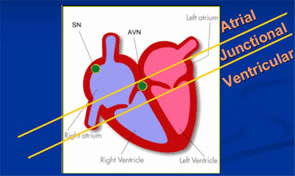
Heart rhythm problems can originate in different parts of the heart, as illustrated below. Above the line is Atrial, or Supraventricular, below the line is Ventricular, and at the line is junctional.
Types of Heart Rate Issues:
- Tachycardia: A heart fast rate above 100 beats per minute. It can make your heart feel like it’s racing.
- Bradycardia: A heart slow rate below 60 beats per minute. This can cause tiredness or discomfort.
Note: Drug treatment is best avoided until a firm diagnosis is made.
| Name | Causes / Affects | Symptoms | Treatment |
| Supraventricular Tachycardia | Irritable spot or electrical short circuit | Palpitations, fatigue, shortness of breath | Medications, private catheter ablation |
| Atrial Flutter | Rapid electrical wave in the atrium | Fast, steady heartbeat | Private medication, Radiofrequency ablation |
| Sick Sinus Syndrome | Dysfunction of the heart’s pacemaker | Slow or irregular heartbeat | Permanent pacemaker |
| Sinus Tachycardia | Normal increase with fever, exercise | Increased heart rate | Treat underlying cause |
| Ventricular Tachycardia | Serious heart disease or normal hearts | Very fast heart rate | Medication, electrical cardioversion, ICD |
| Ventricular Fibrillation | Electrical disorder or heart damage | Rapid, chaotic heartbeat | Defibrillation, immediate treatment needed |
| Premature Contractions | Extra early beats from upper or lower chambers | Skipped beats | Usually benign, monitor if symptomatic |
| Long QT Syndrome | Inherited or drug-induced | Susceptibility to ventricular fibrillation | Specialist care, ICD |
What is the Difference Between Atrial Flutter and Atrial Fibrillation?
Atrial flutter and atrial fibrillation (AF) are both heart rhythm disorders but differ in their patterns and management.
Atrial flutter involves rapid, regular electrical signals that form a loop in the atria, often resulting in a steady, rapid heartbeat. In contrast, AF features chaotic and irregular electrical signals, leading to an erratic heart rhythm.
While both conditions increase stroke risk, AF generally poses a higher risk due to its more disorganised rhythm. Treatment for atrial flutter may include medications, catheter ablation, or cardioversion, while AF often requires a combination of rate control, anticoagulants, and possibly ablation.
What’s My Risk of Stroke in AF?
We use the CHA₂DS₂-VASc score to assess stroke risk in AF patients. This score considers factors like heart failure, hypertension, age, diabetes, vascular disease, and prior stroke or TIA. Based on your score, your treatment may include blood thinners or other therapies to manage AF and reduce stroke risk.
If the CHADVASC score is one or more, then Dr Malik would consider you a candidate for blood thinners to reduce the risk of stroke.
| Condition | Points | |
| C | Congestive heart failure | 1 |
| H | Hypertension: blood pressure consistently above 140/90 mmHg (or treated hypertension on medication) | 1 |
| A | Age > 75 years | 2 |
| D | Diabetes Mellitus | 1 |
| V | Vascular Disease | 1 |
| A | Age 65-74 | 1 |
| S2 | Prior Stroke or TIA | 2 |